Showing posts with label World News – Talking Points Memo. Show all posts

Thursday, 25 April 2019

Sri Lanka’s Top Security Officials Asked To Resign After Failure To Prevent Bombings

COLOMBO, Sri Lanka (AP) — Sri Lanka’s president has asked for the resignations of the defense secretary and national police chief, a dramatic internal shake-up after security forces shrugged off intelligence reports warning of possible attacks before Easter bombings that killed over 350 people, the president’s office said Wednesday.

It wasn’t immediately clear who would be replacing them, but President Maithripala Sirisena said during a televised speech Tuesday that he planned to change the head of the defense forces within 24 hours.

The Islamic State group has claimed responsibility for the attacks, which struck Christians worshipping in three churches and people at three luxury hotels. Authorities remain unsure of its involvement, though many suspect experienced foreign militants were advising, funding or guiding the attackers.

Sri Lanka’s junior defense minister has blamed breakaway members of two obscure local extremist Muslim groups, and said many of the suicide bombers were highly educated and came from well-off families.

“Their thinking is that Islam can be the only religion in this country,” Ruwan Wijewardene told reporters. “They are quite well-educated people,” he said, adding that at least one had a law degree and some may have studied in the UK and Australia.

Leaders have vowed to overhaul the country’s security apparatus after acknowledging that some intelligence units were aware of possible attacks before the Easter bombings.

U.S. Ambassador Alaina Teplitz told reporters that “clearly there was some failure in the system,” but said the U.S. had no prior knowledge of a threat before the attacks, the worst violence in the South Asian island nation since its civil war ended a decade ago.

Teplitz called that breakdown in communication “incredibly tragic.”

Government statements about the attacks have been confused and sometimes contradictory, with police spokesman Ruwan Gunasekara telling reporters Wednesday that there were nine suicide bombers — two more than officials said one day earlier.

One of the additional suicide bombers was the wife of another bomber, Gunasekara said. The woman, two children and three policemen died in an explosion as authorities closed in on her late Sunday, hours after attacks were launched against three churches and three hotels. The ninth suicide bomber has not been identified, though two more suspects were killed in a later explosion on the outskirts of Colombo.

Gunasekara said 60 people have been arrested so far. A team of FBI agents and U.S. military officials were helping in the investigation, Teplitz said.
Officials say all of the main suicide bombers were Sri Lankan.

“We are conducting investigations at the moment to see if there is any direct link to any international organizations,” Wijewardene said.

The Islamic State group’s Aamaq news agency released an image it said showed the attackers’ leader standing amid seven others with covered faces. It provided no other evidence for its claim.

The group, which has lost all the territory it once held in Iraq and Syria, has made a series of unsupported claims of responsibility for various attacks around the world.

Sri Lankan authorities had earlier blamed a local extremist group, National Towheed Jamaar, whose leader, alternately named Mohammed Zahran or Zahran Hashmi, became known to Muslim leaders three years ago for his incendiary online speeches. On Wednesday, Wijewardene said the attackers had broken away from National Towheed Jamaar and another group, which he identified only as “JMI.”

Teplitz declined to discuss whether U.S. officials knew about National Towheed Jamaar or its leader before the attack. “If we had heard something, we would have tried to do something about this,” Teplitz said.

The country has been on heightened alert since the attacks, with police setting off a series of controlled explosions of suspicious objects. No more bombs were found Wednesday.

On Tuesday, in an address to Parliament, Wijewardene said “weakness” within Sri Lanka’s security system had led to the failure to prevent the bombings.

“By now it has been established that the intelligence units were aware of this attack and a group of responsible people were informed about the impending attack,” Wijewardene said. “However, this information has been circulated among only a few officials.”

In a live address to the nation late Tuesday, President Maithripala Sirisena said he also was kept in the dark on the intelligence about the planned attacks and vowed to “take stern action” against officials who failed to share the information. He also pledged “a complete restructuring” of the security forces.

Meanwhile, on Wednesday, Wijewardene also edged away from Tuesday comments that the bombings were retaliation for the March 15 mosque shootings in Christchurch, New Zealand, that killed 50 people. He told reporters Wednesday that the mosque attack may have been a motivation for the bombings, but that there was no direct evidence of that.

An Australian white supremacist was arrested in the Christchurch shootings.
While Sri Lanka’s recent history has been rife with ethnic and sectarian conflict, the Easter Sunday attacks came as a shock.

Sri Lanka is dominated by Sinhalese Buddhists, but the country of 21 million also has a significant Tamil minority, most of whom are Hindu, Muslim or Christian.

Tamil Tiger rebels were known for staging suicide bombings during their 26-year civil war for independence, but religion had little role in that fighting. The Tigers were crushed by the government in 2009. Anti-Muslim bigotry fed by Buddhist nationalists has swept the country since the war ended but Sri Lanka has no history of Islamic militancy. Its small Christian community has seen only scattered incidents of harassment.
___
Associated Press journalists Bharatha Mallawarachi and Jon Gambrell contributed to this report.


from World News – Talking Points Memo http://bit.ly/2Dw4YiC

Wednesday, 24 April 2019

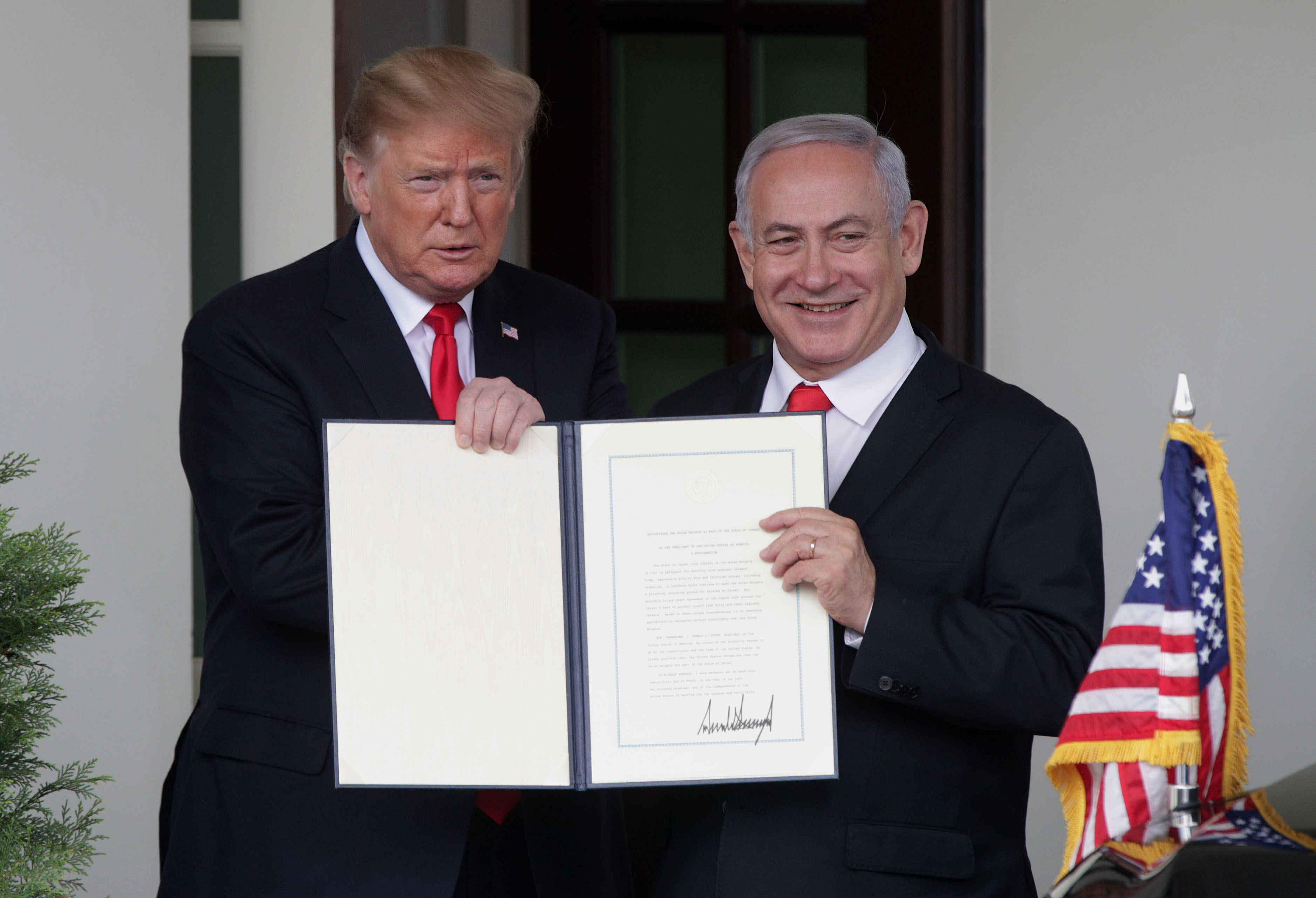
Netanyahu Wants To Name A New Golan Heights Settlement After Trump

JERUSALEM (AP) — Israeli Prime Minister Benjamin Netanyahu says he wants to name a new settlement in the Golan Heights after President Donald Trump out of gratitude for the White House’s recognition of Israeli sovereignty over the territory.

Netanyahu was touring the Golan Heights on Tuesday and said there was a “need to express our appreciation” to the president. He says he will advance “a resolution calling for a new community on the Golan Heights named after President Donald J. Trump.”

Last month Trump officially recognized Israeli sovereignty over the territory it captured from Syria in the 1967 Mideast War.

Israel annexed the mountain plateau in 1981, a move unrecognized by most of the international community. An estimated 20,000 Israelis live in Golan Heights settlements, which most of the international community considers illegal.


from World News – Talking Points Memo http://bit.ly/2GA1D2W

Police Identify ‘New Breed’ Of Terrorists In Northern Ireland After Reporter Fatally Shot

LONDON (AP) — Police in Northern Ireland arrested two teenagers Saturday in connection with the fatal shooting of a young journalist during rioting in the city of Londonderry and warned of a “new breed” of terrorists threatening the peace.

The men, aged 18 and 19, were detained under anti-terrorism legislation and taken to Belfast for questioning, the Police Service of Northern Ireland said. The men have not been identified or charged.

Authorities believe one man pulled the trigger during the chaotic rioting that began Thursday night but had organizational support.

Lyra McKee, 29, a rising star of investigative journalism, was shot and killed, police say probably by a stray bullet aimed at police, during the rioting. Police said the New IRA dissident group was most likely responsible and called it a “terrorist act.”

The use of a firearm apparently aimed at police marks a dangerous escalation in sporadic violence that continues to plague Northern Ireland 21 years after the Good Friday peace agreement was signed. The New IRA group rejects the peace agreement.

Chief detective Jason Murphy warned Saturday that the situation on the ground has become more dangerous, even though community attitudes have changed since the peace agreement and the use of violence is viewed as abhorrent by the vast majority.

“What we are seeing is a new breed of terrorist coming through the ranks and that for me is a very worrying situation,” he said.

The riot followed a pattern familiar to those who lived through the worst years of violence in Northern Ireland. Police arrived in the city’s Creggan neighborhood to search for weapons and dissidents. They were barraged with gasoline bombs and other flying objects, then someone wearing a black mask appeared, fired some shots and fled.

No police were struck by the bullets, but McKee — who had been trying to film the riot on her phone — was hit. The journalist was rushed to a nearby hospital in a police car but still died.

Police on Friday night released closed-circuit TV footage showing the man suspected of firing the shots that killed McKee and appealed for help from the public in identifying him.

The killing was condemned by all the major political parties as well as the prime ministers of Britain and Ireland.

The European Union’s chief Brexit negotiator, Michel Barnier, said the killing was “a reminder of how fragile peace still is in Northern Ireland” and called for work to preserve the Good Friday peace agreement.

Some politicians believe uncertainty over Britain’s impending departure from the EU and the possible re-introduction of a “hard border” between Northern Ireland and the Republic of Ireland are stoking tensions in the region.

The victim was mourned by friends and the wider community. She rose to prominence in 2014 with a moving blog post — “Letter to my 14 year old self” — describing the struggle of growing up gay in Belfast, the capital of Northern Ireland. She also had recently signed a contract to write two books.

Shortly before her death, McKee tweeted a photo of the rioting with the words: “Derry tonight. Absolute madness.”

Her partner, Sara Canning, told a vigil Friday that McKee’s amazing potential had been snuffed out. Canning said the senseless murder “has left me without the love of my life, the woman I was planning to grow old with.”

Catholic priest Joseph Gormley, who administered the last rites to McKee, told the BBC that the rioting was “clearly orchestrated” by a “small group of people who want to play political games with our lives.”

He said he and other community leaders had tried to talk to the dissidents without success.

The New IRA is a small group that rejects the 1998 Good Friday agreement that marked the Irish Republican Army’s embrace of a political solution to the long-running violence known as “The Troubles” that had claimed more than 3,700 lives.
The group is also blamed for a Londonderry car bombing in January and has been linked to several other killings in the past decade.


from World News – Talking Points Memo http://bit.ly/2GqdUa1

Yellow Vest Anger Burns In Paris, Fueled By France’s Notre Dame Fire Response

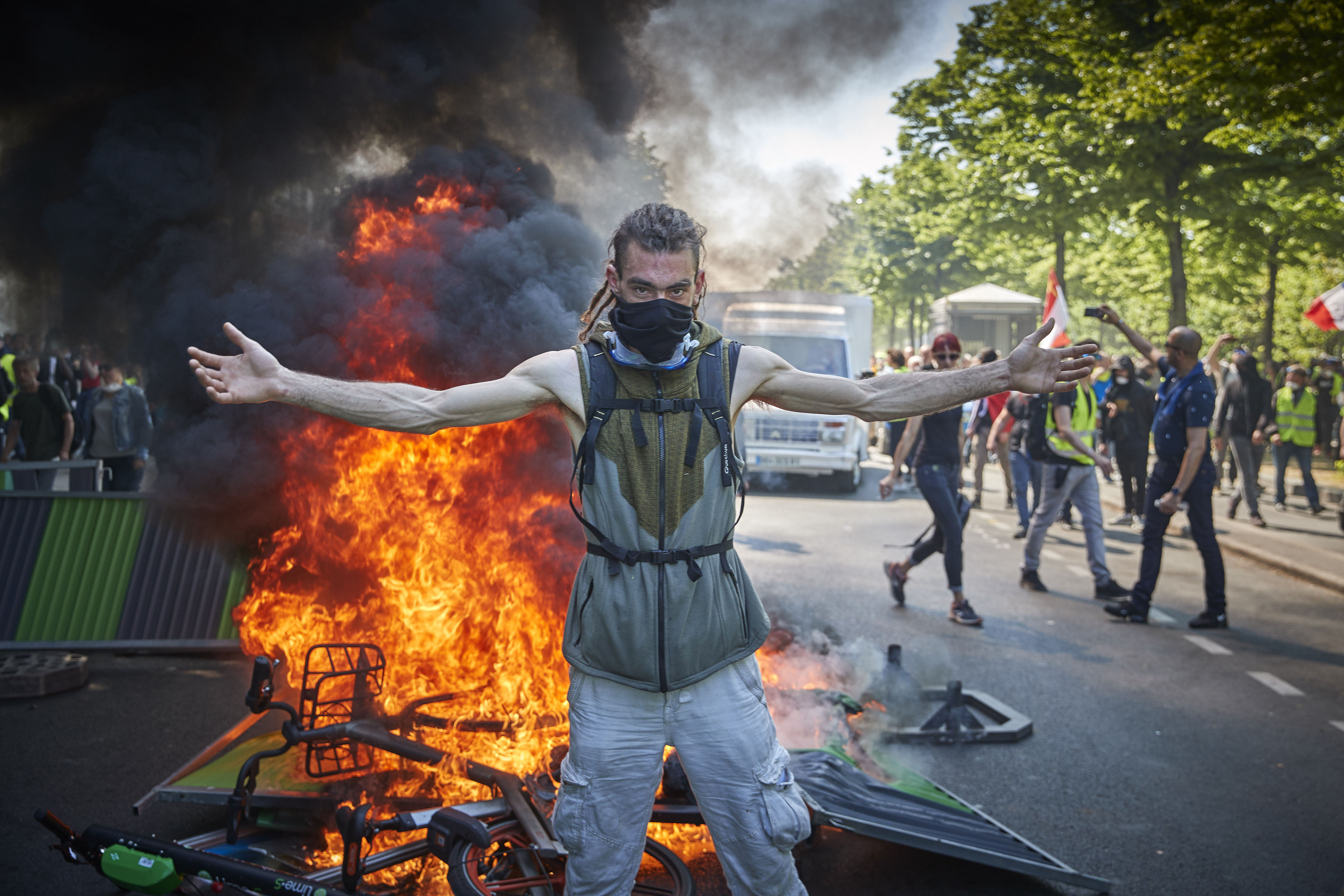
PARIS (AP) — French yellow vest protesters set fires along a march route through Paris on Saturday to drive home their message to a government they see as out of touch with the problems of the poor: that rebuilding the fire-ravaged Notre Dame Cathedral isn’t the only problem France needs to solve.

Like the high-visibility vests the protesters wear, the scattered small fires in Paris appeared to be a collective plea to the government to “look at me — I need help too!”

Police fired water cannon and sprayed tear gas to try to control radical elements on the margins of the largely peaceful march, one of several actions around Paris and other French cities.

The protesters were marking the 23rd straight weekend of yellow vest actions against economic inequality and President Emmanuel Macron’s government, which they see as favoring the wealthy and big business at the expense of ordinary workers. Protesters see themselves as standing up for beleaguered French workers, students and retirees who have been battered by high unemployment, high taxes and shrinking purchasing power.

Associated Press reporters saw a car, motorbikes and barricades set ablaze around the Place de la Republique plaza in eastern Paris. The smell of tear gas fired by police mixed with the smoke, choking the air.

Paris firefighters — who struggled earlier this week to prevent the 12th-century Notre Dame from collapsing — quickly responded to extinguish the flames at Saturday’s protest.

One masked protester dressed in black jumped on a Mercedes parked along the march route, smashing its front and back windshields.

Paris police headquarters said authorities detained 137 people by early afternoon and carried out spot checks on more than 14,000 people trying to enter the capital for Saturday’s protests.

The tensions focused on a march of several thousand people that started at the Finance Ministry in eastern Paris to demand lower taxes on workers and retirees and higher taxes on the rich.

Another group of about 200 people tried to march to the president’s Elysee Palace in central Paris, but riot police blocked them at the neo-classical Madeleine Church.

Yet another group tried to demonstrate yellow vest mourning over the Notre Dame blaze while also keeping up the pressure on Macron. They wanted to march to Notre Dame itself, but were banned by police, who set up a large security perimeter around the area.

One protester carried a huge wooden cross resembling those carried in Good Friday processions as he walked on a nearby Paris embankment.

Many protesters were deeply saddened by the fire at a national monument. But at the same time they are angry at the $1 billion in donations for Notre Dame renovations that poured in from French tycoons while their own economic demands remain largely unmet and they struggle to make ends meet.

“I think what happened at Notre Dame is a great tragedy but humans should be more important than stones. And if humans had a little bit more money, they too could help finance the reconstruction work at Notre Dame. I find this disgusting,” said protester Jose Fraile.

Some 60,000 police officers were mobilized for Saturday’s protests across France. The movement is largely peaceful but extremists have attacked treasured monuments, shops and banks and clashed with police.

The heavy police presence meant subway stations and roads around Paris were closed Saturday, thwarting tourists trying to enjoy the French capital on a warm spring day.

“Paris is very difficult right now,” said Paul Harlow, of Kansas City, Missouri, as he looked sadly at the damaged Notre Dame.

He and his wife Susan were in Paris only for a few days and didn’t make it in time to see the cathedral. On Saturday, their efforts to visit museums were derailed by closed subways and barricaded roads.

“I don’t think we’ll be back,” he said.

Other visitors showed solidarity with the yellow vest cause.

“I am not interested in joining them, but I can understand what they’re angry about,” said Antonio Costes, a retiree from the Paris suburb of Montreuil who came Saturday to see the damage to Notre Dame. “There is a lot of injustice.”

Macron had been scheduled to lay out his responses to yellow vest concerns on Monday night — but canceled the speech because the Notre Dame fire broke out. He’s now expected to do so next Thursday.

Some yellow vest critics accuse Macron of trying to exploit the fire for political gain. One protester carried a sign targeting Macron that read: “Pyromaniac – we are going to carbonize you.”

Another huge sign read: “Victor Hugo thanks all the generous donors ready to save Notre Dame and proposes that they do the same thing with Les Miserables,” referring to the famed author’s novels about the cathedral and the struggles of France’s poor.

Some prominent yellow vest figures who had stopped protesting said they were returning to the streets Saturday out of an even greater sense of being overlooked since the Notre Dame tragedy.

Anti-rich messages have flourished on social media in recent days as yellow vest protesters exhorted wealthy donors to be more generous with France’s working class.
___
Chris den Hond, Francisco Seco and Deborah Gouffran in Paris contributed to this report.
___
Read and watch all AP coverage of the Notre Dame fire at http://bit.ly/2v9D7jI


from World News – Talking Points Memo http://bit.ly/2KSyAN9

North Korea Wants Pompeo Out Of Nuclear Talks, Accuses Him Of ‘Talking Nonsense’

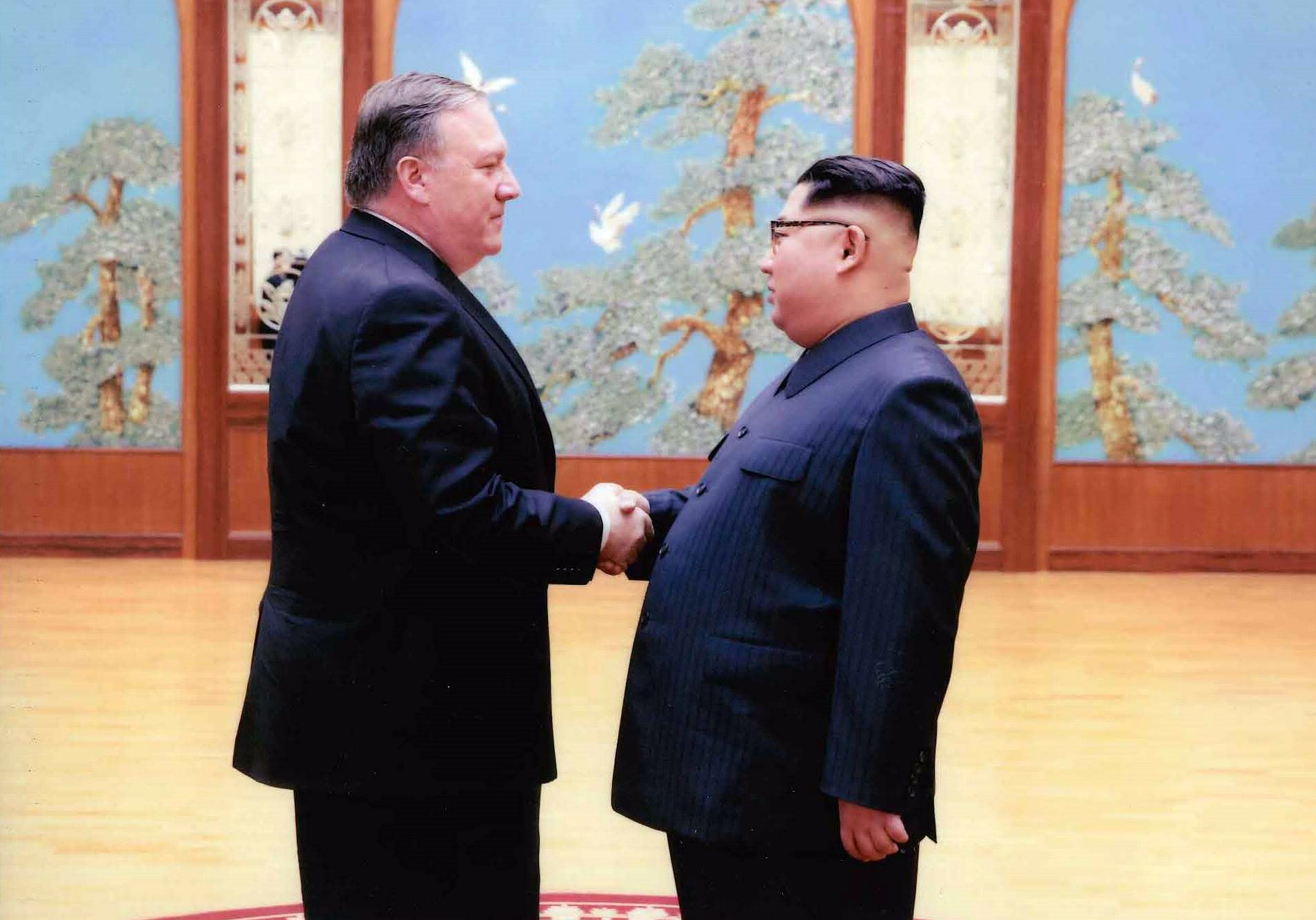
PYONGYANG, NORTH KOREA - APRIL 25: In this handout provided by The White House, CIA director Mike Pompeo shakes hands with North Korean leader Kim Jong Un in this undated image in Pyongyang, North Korea. Pompeo, now Secretary of State spoke with Kim for more than an hour during the Easter weekend. (Photo by The White House via Getty Images)

SEOUL, South Korea (AP) — North Korea said Thursday that it had test-fired a new type of “tactical guided weapon,” its first such test in nearly half a year, and demanded that Washington remove Secretary of State Mike Pompeo from nuclear negotiations.

The test, which didn’t appear to be of a banned mid- or long-range ballistic missile that could scuttle negotiations, allows North Korea to show its people it is pushing ahead with weapons development while also reassuring domestic military officials worried that diplomacy with Washington signals weakness.

Separately, the North Korean Foreign Ministry accused Pompeo of playing down the significance of comments by leader Kim Jong Un, who said last week that Washington has until the end of the year to offer mutually acceptable terms for an agreement to salvage the high-stakes nuclear diplomacy. Both the demand for Pompeo’s removal from the talks and the weapon test point to North Korea’s displeasure with the deadlocked negotiations.

In a statement issued under the name of Kwon Jong Gun, director general of the American Affairs Department at the Foreign Ministry, North Korea accused Pompeo of “talking nonsense” and misrepresenting Kim’s comments.

During a speech at Texas A&M on Monday, Pompeo said Kim promised to denuclearize during his first summit with President Donald Trump and that U.S. officials were working with the North Koreans to “chart a path forward so we can get there.”

“He (Kim) said he wanted it done by the end of the year,” Pompeo said. “I’d love to see that done sooner.”

The North Korean statement said Pompeo was “misrepresenting the meaning of our requirement” for the negotiations to be finalized by the year’s end, and referred to his “talented skill of fabricating stories.” It said Pompeo’s continued participation in the negotiations would ensure that the talks become “entangled” and called for a different counterpart who is “more careful and mature in communicating with us.”

In a speech at his rubber-stamp parliament last week, Kim said he is open to a third summit with Trump, but only if the United States changes its stance on sanctions enforcement and pressure by the end of the year.

Kim observed the unspecified weapon being fired Wednesday by the Academy of Defense Science, the North’s state-run Korean Central News Agency said. Kim was reported to have said “the development of the weapon system serves as an event of very weighty significance in increasing the combat power of the People’s Army.”

The Associated Press could not independently verify North Korea’s claim, and it wasn’t immediately clear what had been tested. A major ballistic missile test would jeopardize the diplomatic talks meant to provide the North with concessions in return for disarmament. A South Korean analyst said that details in the North’s media report indicate it could have been a new type of cruise missile. Another possible clue: one of the lower level officials mentioned in the North’s report on the test — Pak Jong Chon — is known as an artillery official.

Some in Seoul worry that the North will turn back to actions seen as provocative by outsiders as a way to force Washington to drop its hard-line negotiating stance and grant the North’s demand for a removal of crushing international sanctions. A string of increasingly powerful weapons tests in 2017 and Trump’s response of “fire and fury” had many fearing war before the North shifted to diplomacy.

Russia announced Thursday that Kim will visit later this month for talks at the invitation of President Vladimir Putin, but gave no further details. Russian media have been abuzz in recent days with rumors about the rare meeting between the leaders.

Putin is to visit China later this month, and some media speculated that he could meet with Kim in Vladivostok, the far eastern port city near the border with North Korea.

Trump said last month that he “would be very disappointed if I saw testing.” There have been fresh reports of new activity at a North Korean missile research center and long-range rocket site where the North is believed to build missiles targeting the U.S. mainland. North Korean media said Wednesday that Kim guided a flight drill of combat pilots from an air force and anti-aircraft unit tasked with defending the North from an attack.

Kim Dong-yub, an analyst from Seoul’s Institute for Far Eastern Studies, said North Korea’s descriptions of the test show the weapon is possibly a newly developed cruise missile. The North’s report said the “tactical guided weapon” successfully tested in a “peculiar mode of guiding flight” and demonstrated the ability to deliver a “powerful warhead.”

The analyst said the test could also be intended as a message to the North Korean people and military of a commitment to maintaining a strong level of defense even as it continues talks with Washington over nukes.

Melissa Hanham, a non-proliferation expert and director of the Datayo Project at the One Earth Future Foundation, said the North Korean weapon could be anything from an anti-tank weapon to a cruise missile.

The North said Thursday that Kim Jong Un mounted an observation post to learn about and guide the test-fire of the weapon.

This is the first known time Kim has observed the testing of a newly developed weapon system since last November, when North Korean media said he watched the successful test of an unspecified “newly developed ultramodern tactical weapon.” Some observers have been expecting North Korea to orchestrate “low-level provocations,” like artillery or short-range missile tests, to register its anger over the way nuclear negotiations were going.

North Korean officials accompanying Kim at the test included Ri Pyong Chol and Kim Jong Sik, two senior officials from the North’s Munitions Industry Department who have been sanctioned by the U.S. Treasury Department for their activities related to the country’s ballistic missile program. Ri is believed to be a key official involved in North Korea’s intercontinental ballistic missile development, while Kim Jong Sik has been linked to the country’s efforts to build solid-fuel missiles. The Pyongyang-based Munitions Industry Department is sanctioned both by the United States and the U.N. Security Council.

“Even if this is not a ‘missile’ test the way we strictly define it, these people and MID are all sanctioned entities for a reason,” Hanham said.

The White House said it was aware of the report and had no comment. The Pentagon also said it was aware but had no information to provide at this point. South Korea’s presidential office said it has no immediate comment. South Korea’s Joint Chiefs of Staff said it is analyzing the test but did not specifically say what the weapon appeared to be.

After the animosity of 2017, last year saw a stunning turn to diplomacy, culminating in the first-ever summit between the U.S. and North Korea in Singapore, and then the Hanoi talks this year. North Korea has suspended nuclear and long-range rocket tests, and the North and South Korean leaders have met three times. But there are growing worries that the progress could be killed by mismatched demands between the U.S. and North Korea over sanctions relief and disarmament.
___

Associated Press writers Hyung-jin Kim in Seoul and Lolita C. Baldor in Washington contributed to this report.


from World News – Talking Points Memo http://bit.ly/2XgFtJw

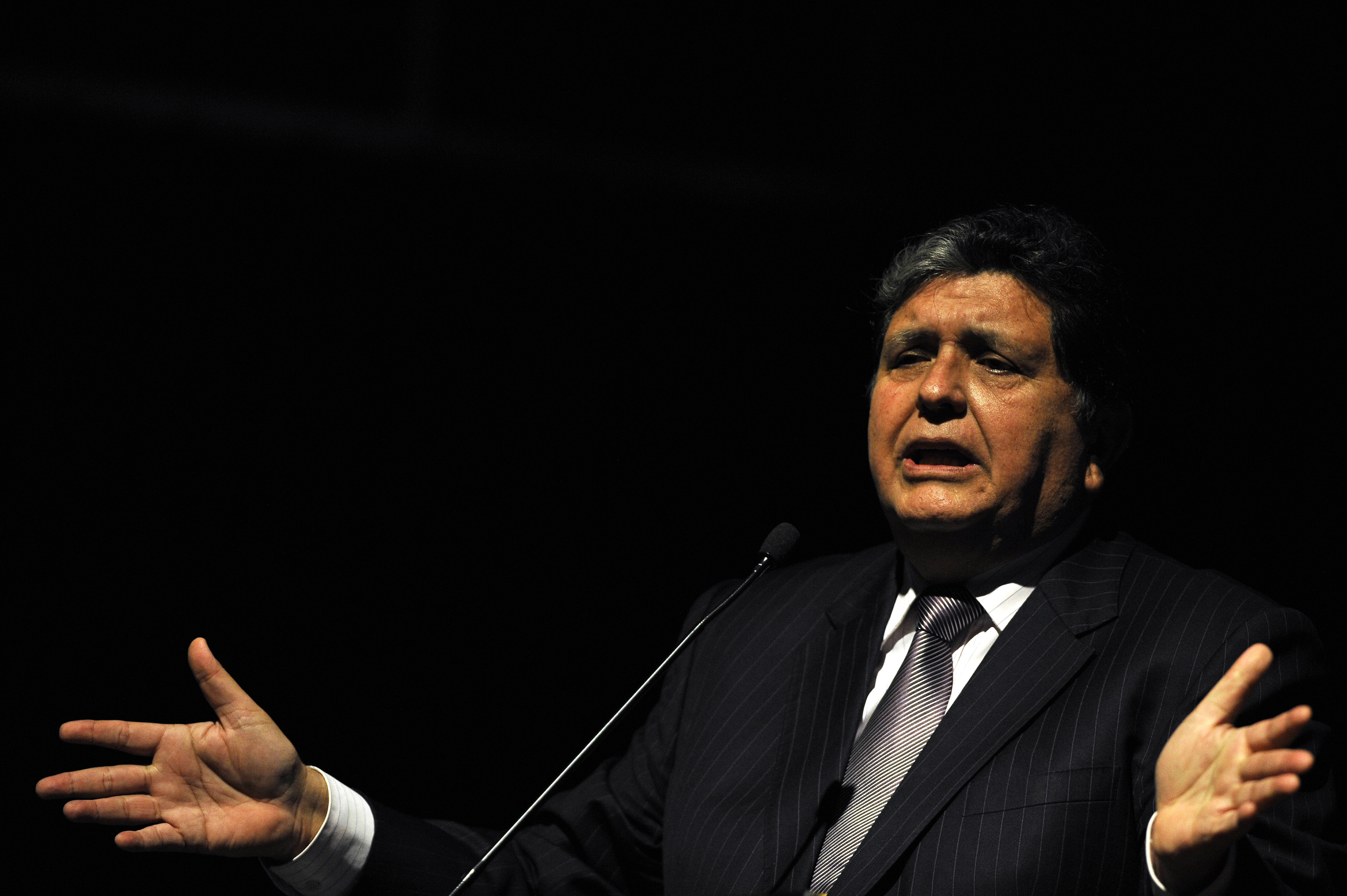
Former Peruvian President Alan García Dies After Shooting Himself In The Head

LIMA, Peru (AP) — Former Peruvian President Alan García died Wednesday after shooting himself in the head moments after police attempted to detain him amid corruption allegations in Latin America’s largest graft probe.

President Martin Vizcarra announced on Twitter that García died after undergoing emergency surgery hours earlier. Doctors at the José Casimiro Ulloa Hospital in the capital city of Lima said they provided cardiac resuscitation three times while trying to save his life.

“Distraught over the death of ex-President Alan García,” Vizcarra wrote. “I send my condolences to his family and loved ones.”

The shocking end for the man who twice ruled Peru but more recently was ensnared in the Odebrecht corruption scandal comes amid national upheaval over endemic corruption involving nearly every former living president.

García repeatedly professed his innocence and said he was the victim of false testimony by political enemies who accused him of taking more than $100,000 from the Brazilian construction giant. Odebrecht admitted in a 2016 plea agreement with the U.S. Justice Department that it paid nearly $800 million throughout Latin America in exchange for lucrative public works contracts.

The 69-year-old former head of state’s attorney accused authorities Wednesday of neglecting to provide García information on why he was being detained or show their official identifications when they showed up to arrest him.

“The president, upset over this situation, knowing his absolute innocence … had this terrible accident,” attorney Erasmo Reyna said.

Interior Minister Carlos Morán said police found García on the second floor of his home when they arrived. He asked for a moment to call his lawyer, entering a bedroom of the leafy mansion in Miraflores and closing the door behind him.

“Minutes later the sound of gunfire was heard,” Morán said. “Police forced their way into the room and found him.”

He was immediately transported to the hospital, arriving at 6:45 a.m. local time. A team of doctors, some called from outside hospitals, began operating at 7:10 a.m., according to Peru’s health ministry.

“The situation is very critical,” Health Minister Zulema Tomás said shortly after the incident. “It’s grave.”

The stunning turn of events comes four months after García tried to seek asylum in Uruguay as prosecutors in Peru investigated allegations he illegally took payments from Odebrecht. He remained there for a little more than two weeks before having his request denied. In rejecting his claim, the South American nation’s embassy said there was no evidence to support García’s contention that he was being targeted politically.

“In Peru, the three branches of government function freely and autonomously, especially in the case of judicial power,” Uruguayan President Tabaré Vázquez said.

Peru has gone further than any other country outside Brazil in prosecuting politicians tied to the Odebrecht probe. All but one living former head of state is being investigated for corruption tied to the scandal.

Just last week, former President Pedro Pablo Kuczynski was also detained for alleged money laundering tied to the probe. Congressional allies said he was taken Tuesday night to a local clinic with high blood pressure.

On Wednesday, Alberto Quintanilla, a congressman from the left-leaning political party Nuevo Peru, expressed solidarity with the family of García and said that he hoped officials “would advance knowledge of the truth” through their investigations, but also respect due process.

García was a populist firebrand whose erratic first presidency in the 1980s was marked by hyperinflation, rampant corruption and the rise of the Shining Path guerrilla movement.

When he returned to power two decades later he ran a more conservative government, helping usher in a commodities-led investment boom in which Odebrecht played a major supporting role.

A judicial order obtained by The Associated Press shows Judge Juan Sanchez ordered authorities to arrest García and search for documents in his home related to money laundering allegations.

Prosecutors suspect the former president received more than $100,000 from Odebrecht, disguised as a payment to speak at a conference in Brazil.


from World News – Talking Points Memo http://bit.ly/2UJ1qnE

Saturday, 13 April 2019

EU Grants Six-Month Delay Of Brexit

LONDON (AP) — British Prime Minister Theresa May urged lawmakers Thursday to spend the upcoming Easter break to “reflect” on the need for a Brexit compromise, after a clearly frustrated European Union gave the country six more months to find a way to leave the bloc.She said doing so and passing an EU withdrawal agreement quickly would allow Britain to avoid taking part in European parliamentary elections set for late May, an unpalatable prospect to many, particularly in her Conservative Party.

May was addressing lawmakers just hours after returning from a special summit in Brussels at which the other 27 EU leaders delayed Britain’s scheduled departure from the bloc from this Friday to Oct. 31.

Given that Britain’s fractious Parliament has rejected her Brexit withdrawal deal with the EU on three occasions this year, her hopes for a quick resolution could rest in large part on whether her Conservative Party-led government can find common ground with the opposition Labour Party.

The talks, which both sides call serious and constructive, are expected to continue in the coming week.

Speaking after May, the usually combative Labour leader Jeremy Corbyn said he welcomes indications that the government may be altering some of its long-held policies and specifically called for movement on the key issue of remaining in a customs union with the EU after Brexit.

“The government will have to compromise,” he said, warning that any agreement would have to be entrenched because Labour has no idea who will replace May.
Without support from the Labour Party, May’s path toward actually taking Britain out of the EU remains unclear.

She is blocked by a strong faction in her own Conservative Party that hates her withdrawal deal and hopes to oust her.

May’s own authority has been gravely compromised by the long Brexit ordeal and she has promised to step down once Britain leaves the bloc — if efforts to get rid of her more quickly do not bear fruit.

Many in the left-wing Labour Party fear that May, who has indicated she will depart once Brexit is achieved, will be replaced by a staunch Brexiteer like Boris Johnson, the former foreign secretary.

Faced with so much uncertainty, EU leaders whose talks went well after midnight, agreed on the Halloween cutoff date.

If no extension had been granted, then Britain faced the prospect of crashing out of the EU this Friday with no deal, a scenario that in Parliament worry would lead to a deep recession as tariffs are slapped on U.K. exports and other restrictions on trade are imposed.

“Please, do not waste this time,” European Council President Donald Tusk pleaded. He said the EU was giving Britain six more months “to find the best possible solution” to its Brexit impasse.

Like many things Brexit-related, the extension was a compromise. May came to the summit in Brussels seeking a delay to June 30. Some European leaders favored a longer extension, but French President Emmanuel Macron was wary of anything than a very short delay. May spoke to EU leaders for just over an hour, before they deliberated among themselves.

Tusk said that during the extension Britain “will continue its sincere cooperation as a full member state, with all its rights, and as a close friend and trusted ally in the future.”

This is the second delay to Brexit. Originally set for March 29, May sought an extension after Parliament’s constant rejections. The EU gave Britain until this Friday to approve a withdrawal plan, change course, seek a further delay to Brexit, or crash out of the EU with no deal to cushion the shock.

The Confederation of British Industry said the Brexit extension means an “imminent economic crisis” has been averted for now.

Pro-EU politicians said the next few months should be used to hold a new referendum on whether to leave the EU or remain. Scottish National Party Nicola Sturgeon said in a tweet after the extension was granted that the British people should be allowed to “decide if they still want to leave.”

Irish Prime Minister Leo Varadkar said the time had come for Britain to decide what it wants.

“We’re giving them a very long time to take a decision,” he said.

“You know, the European Union is not a prison. Nobody has to stay but it is also a home and we are not going to kick anyone out.”
___
Associated Press writers Raf Casert, Jill Lawless, Mike Corder and Angela Charlton in Brussels. Danica Kirka in London, and Sylvie Corbet in Paris contributed to this report.
___
Follow AP’s full coverage of Brexit at: http://bit.ly/2skvMfP


from World News – Talking Points Memo http://bit.ly/2VLgNbC

Sudanese Officials Say Army Forced Autocratic President To Step Down

CAIRO (AP) — Tens of thousands of Sudanese marched toward the center of the capital Khartoum on Thursday, cheering, singing and dancing in celebration as two senior officials said the military had forced longtime autocratic President Omar al-Bashir to step down after 30 years in power.

The circumstances of al-Bashir’s apparent ouster after months of intensifying protests against his rule were not clear, however, and his whereabouts were unknown. The military told the nation to expect an “important statement” soon in an announcement on state TV in the morning.

Word of al-Bashir’s removal comes just over a week after Algeria’s President Abdelaziz Bouteflika, in power for 20 years, resigned in response to similar demonstrations. The mass protests bear striking resemblances to the popular uprisings in 2011 that swept across several Arab nations and ousted leaders in Tunisia, Libya, Egypt and Yemen.

The developments raised speculation that, behind the scenes, the military aimed to install one of its one in place of al-Bashir. Organizers of the protests that have drawn tens of thousands into the streets reject that, seeing it as a way for the armed forces to keep the power that it has held under al-Bashir. Instead, they demand a civilian transitional government.

One main organizer, the Sudanese Professionals Association, said the protest leaders were in talks with the military over the transition. Sarah Abdel-Jaleel, a spokeswoman for the association, told The Associated Press they will not accept a military coup and insist on an “unconditional stepping down of al-Bashir and his regime.”

Meanwhile, the movement called on protesters to keep up the pressure by continuing their main sit-in outside the military’s headquarters in Khartoum. “We are not leaving. We urge the revolutionaries not to leave the sit-in,” the association said, warning against attempts to “reproduce the old regime.”

Two officials in high positions in Sudan’s government and military, told the AP that the military was in talks about a transitional government after forcing al-Bashir to step down. They spoke on condition of anonymity because they were not authorized to talk to the media.

In an apparent concession to a demand of the protesters, the National Security and Intelligence Service said in a statement that all political detainees would be released. It did not indicate when the release would take place.

Sudan’s protests initially erupted last December with rallies against a worsening economy, but quickly escalated into calls for an end to embattled al-Bashir’s rule. They gained new momentum last week after Bouteflika’s resignation.

As the Khartoum sit-in surged in size, the government responded with an increased crackdown. Security forces tried repeatedly to break up the sit-in since Saturday, in violence that killed at least 22 people.

Early Thursday morning, the military deployed to secure key sites and installations around Khartoum, witnesses said. Armored vehicles and tanks were parked in the streets and near bridges over the Nile River, they said, as well as in the vicinity of the military headquarters where the sit-in is taking place. The witnesses spoke on condition of anonymity, fearing reprisals. There were also unconfirmed reports that the airport in the Sudanese capital had been closed.

Ahead of the expected army statement, Sudanese radio played military marches and patriotic music. State TV ceased regular broadcasts, showing only the statement promising the statement and urging the public to “wait for it.”

Thousands waited at the sit-in as crowds of protesters moved through the city converging on the site. The marchers waved flags, flashed “V for victory:” signs and sang and danced. Some rode on the roofs of cars, moving slowly and honking horns in celebration.

But the hours without an army statement raised fears among protesters that the military was seeking to keep its control.

“Is there an attempt to get around the anger of the Sudanese people after they failed to end the protests by violence? If so, the revolution will continue,” said Mariam al-Mahdi, of the opposition Umma Party.

Al-Bashir came to power in a 1989 coup, leading an alliance of the military and Islamist hard-liners. Since then, the military has stuck by him, even as he was forced to allow the separation of South Sudan and as he became a pariah in many countries, wanted by by the international war crimes tribunal for atrocities in Darfur.

The protests that erupted in December have been the biggest challenge to his rule. Security forces responded from the start with a fierce crackdown that killed dozens. Al-Bashir banned unauthorized public gatherings and granted sweeping powers to the police since imposing a state of emergency in February. Security forces have used tear gas, rubber bullets, live ammunition and batons against demonstrators

The military, however, has seemed more equivocal, stating its support the country’s “leadership” and pledging to protect its “achievements” — without mentioning al-Bashir by name. Army troops have not tried to stop protests and, in some cases, appeared to offer a measure of protection for the demonstrators.

Some in the protest movement have seen that as a willingness in the military to drop al-Bashir.


from World News – Talking Points Memo http://bit.ly/2Ie6tWL

Netanyahu Appears To Win 5th Term, Raising Palestinian Fears Of Annexation

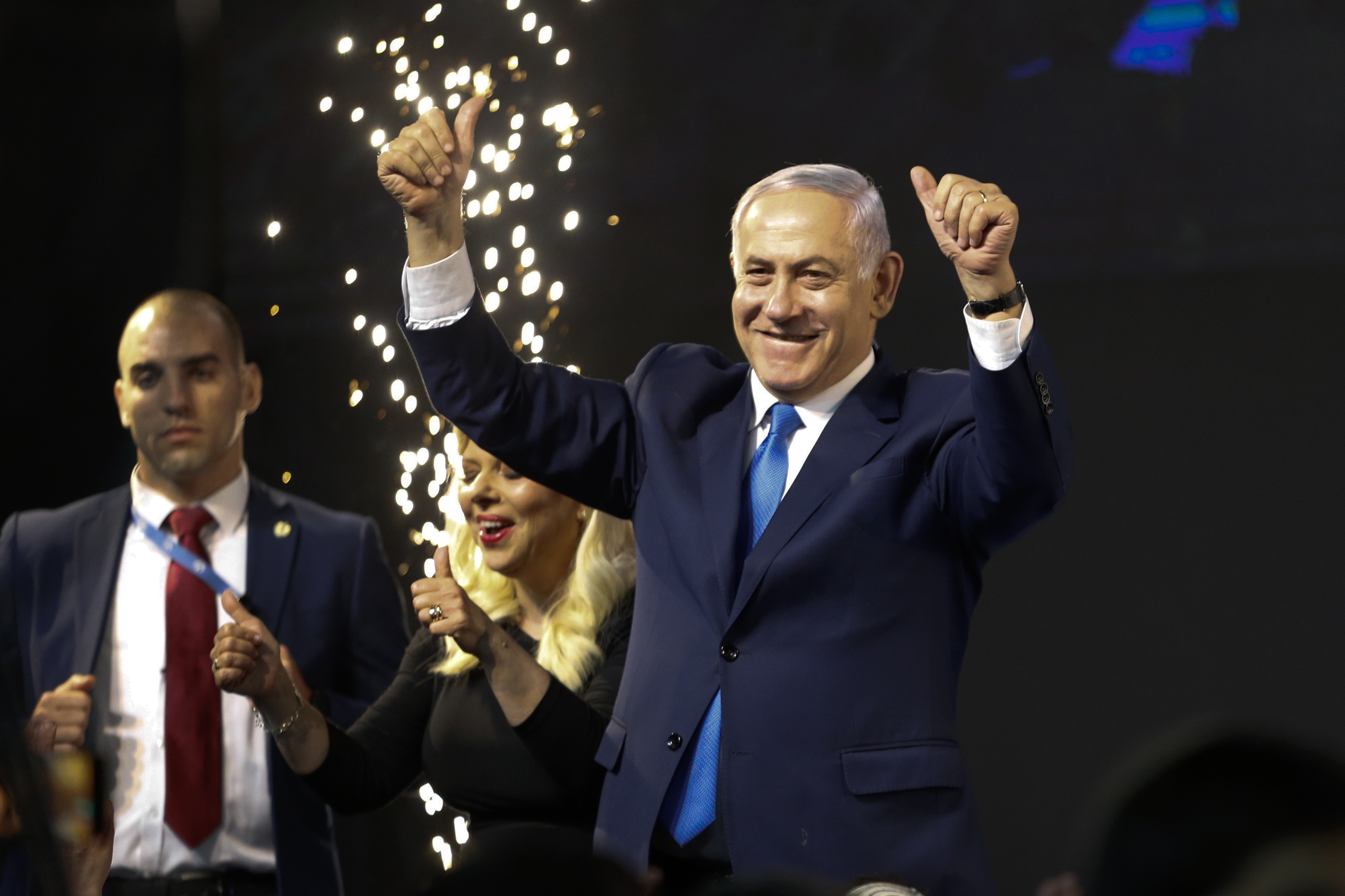
JERUSALEM (AP) — Benjamin Netanyahu appeared to be headed toward a historic fifth term as Israel’s prime minister on Wednesday, with close-to-complete unofficial election results giving his right-wing Likud and other nationalist and religious parties a solid majority in parliament.

The outcome affirmed Israel’s continued tilt to the right and further dimmed hopes of a negotiated solution to the Israeli-Palestinian conflict. Re-election will also give Netanyahu an important boost as he braces for the likelihood of criminal charges in a series of corruption scandals.

With 97.4% of the vote counted, Likud and its traditional political allies were in command of a 65-55 majority in parliament. A couple of small parties were still teetering along the electoral threshold and fighting for their survival, so the final makeup of the next parliament has yet to be decided. Final results were expected Thursday.

Two of his potential allies, hawkish former Defense Minister Avigdor Lieberman and economic-centric Finance Minister Moshe Kahlon, have yet to formally confirm they would sit with Netanyahu and could emerge as wildcards. In any case, the country now faces what could be weeks of political negotiations over the composition of a ruling coalition.

But under nearly every scenario, Netanyahu was the big winner.

The long-time Israeli leader had fought a tight, ugly race against centrist ex-military chief Benny Gantz, whose nascent Blue and White party emerged as a viable alternative to Netanyahu’s decade in power. The near-final results showed it deadlocked with Likud at 35 seats. But most of its support seems to have come at the expense of the venerable Labor and leftist Meretz parties, who both earned historic lows in Tuesday’s election.

Together with his current Jewish ultra-Orthodox and nationalist partners, Netanyahu seemed to have a clear path toward building a coalition government that has a majority in the 120-seat parliament.

With a victory, Netanyahu would capture a fourth consecutive term and fifth overall, which this summer will make him Israel’s longest-ever serving leader, surpassing founding father David Ben-Gurion.

“It’s a night of tremendous victory,” Netanyahu told supporters early Wednesday. “I was very moved that the nation of Israel once again entrusted me for the fifth time, and with an even greater trust.”

He said he had already begun talking to fellow right wing and religious parties about forming a new coalition.

“I want to make it clear, it will be a right-wing government, but I intend to be the prime minister of all Israeli citizens, right or left, Jews and non-Jews alike,” he said.

Netanyahu’s message of unity was a sharp contrast from his campaign theme in which he accused Gantz of conspiring with Arab parties to topple him. Arab leaders accused Netanyahu of demonizing the country’s Arab community, which is about 20 percent of the population.

His attacks on the Arab sector fueled calls for a boycott and appeared to result in relatively low turnout by Arab voters.

Overnight, with fewer of the votes counted, Blue and White still appeared to be ahead by one seat and Gantz projected optimism that he would be tasked with building a coalition. But by morning, he seemed to have realized his dream of becoming prime minister was lost, even if he didn’t formally concede defeat.

“Though the skies appear gloomy, nothing is final. There could be changes and some political options could open up,” he wrote to his supporters. “Our voters asked for hope and we gave it to them. They wanted a different way and we outlined it.”

Though the Palestinian issue was rarely mentioned in the raucous campaign, Netanyahu had in the final stretch pledged for the first time to annex parts of the occupied West Bank in a desperate bid to rally his right-wing base. Netanyahu has welched on election eve promises before, but should he follow through on this one, it would mark a dramatic development and potentially wipe out the already diminishing hope for Palestinian statehood.

An aide to Palestinian President Mahmoud Abbas said the outcome of the election raised Palestinian fears about an Israeli annexation of parts of the occupied West Bank. Ahmed Majdalani said Palestinians will seek the help of the international community to try to block any such plans. He said that the outcome of the election means a boost for what he called the “extreme right-wing camp” in Israeli politics.

Hanan Ashrawi, a senior Palestinian official, said Israel chose to entrench “the status quo of oppression, occupation, annexation and dispossession.”

The 69-year-old Netanyahu has been the dominant force in Israeli politics for the past two decades and its face to the world. His campaign has focused heavily on his friendship with President Donald Trump and his success in cultivating new allies, such as China, India and Brazil.

But his corruption scandals created some voter fatigue. Along with two other former military chiefs on his ticket, Gantz was able to challenge Netanyahu on security issues, normally the prime minister’s strong suit, while also taking aim at the prime minister’s alleged ethical lapses.

Israel’s attorney general has recommended charging Netanyahu with bribery, breach of trust and fraud in three cases and a potential fourth case emerged during the campaign. He will only decide on indicting Netanyahu after a legally mandated hearing. Legal experts expect at least some charges to be filed, which could set the stage for a short term in office for Netanyahu and another round of elections soon.

“This is a clear beginning of Netanyahu’s fifth term, but his fifth term might end up being his shortest one”, says Reuven Hazan, a political scientist from Jerusalem’s Hebrew University. “In another year, we might be in a battle for either leadership of the Likud or another election.”
___
Follow Heller at http://www.twitter.com/aronhellerap


from World News – Talking Points Memo http://bit.ly/2Gc4ekk

Wednesday, 3 April 2019

Theresa May Says UK Seeks Further Brexit Delay In Attempt To Break Logjam

LONDON (AP) — With Britain racing toward a chaotic exit from the European Union within days, Prime Minister Theresa May veered away from the cliff-edge Tuesday, saying Britain would seek a further delay to Brexit as its politicians sought a compromise solution to the crisis.

May made the announcement after the EU’s chief negotiator warned that a disruptive and costly Brexit was likely unless Britain broke the impasse that has paralyzed the government and Parliament.

After almost three years of refusal to bend in her insistence that Britain embrace her vision of Brexit, May said the country needed “national unity to deliver the national interest.”

Following the defeat of the government’s plan and a range of lawmaker-written alternatives, May said Britain would need a further delay to its EU departure, currently scheduled for April 12. And she offered to hold talks with opposition Labour Party leader Jeremy Corbyn in an attempt to find a compromise solution.

“This debate, this division, cannot drag on much longer,” May said in a televised statement from 10 Downing St. that acknowledged her attempts to win backing for the government’s version of Brexit had failed.

European Council President Donald Tusk gave a cautious welcome to May’s change of course.

“Even if, after today, we don’t know what the end result will be, let us be patient,” he tweeted — a suggestion the EU would wait for Britain to present a clear plan.

Earlier, EU negotiator Michel Barnier offered a downbeat assessment of the situation.

“As things stand now, the no-deal option looks likely. I have to tell you the truth,” Barnier said in Brussels.

Barnier said “we can still hope to avoid it” if the intensive work in London produces a breakthrough before an April 10 EU summit.

The leaders of the EU’s 27 remaining countries have given the U.K. until April 12 to leave the bloc or to come up with a new plan, after lawmakers thrice rejected an agreement struck between the bloc and May late last year.

The House of Commons has also failed to find a majority for any alternative plan in two days of voting on multiple options.

May’s statement came after a seven-hour meeting of her Cabinet, which is split between supporters of a “soft Brexit” that keeps close economic ties with the EU, and Brexiteers who believe a no-deal exit is better than compromising.

Her words seemed to indicate that she was veering away from the possibility of a no-deal Brexit — but also that she has not given up on her own withdrawal agreement, which has been rejected by Parliament three times.

Her plan is to seek approval for the legally binding agreement — which sets out the terms of Britain’s departure and triggers a long transition period for the two sides to work out future relations — after securing cross-party political support for a vision of those future ties between the U.K. and the EU.

If she and Corbyn fail to reach agreement, May said Parliament would get to vote on a range of options — and the government would be bound by the result. It is the first time she has committed to following the instruction of lawmakers.

May said she hoped Britain could pass the agreement by May 22, in time to avoid participating in elections for the European Parliament.

A no-deal Brexit would jeopardize trade and travel, with new checks on borders and new regulations on dealings between the EU and Britain.

Barnier said the EU was prepared, but “being prepared for no deal does not mean that there will be no disruption.”

Businesses have warned that the economic impact in Britain could be devastating.

Ford of Europe Chairman Steven Armstrong said “a no-deal Brexit would be a disaster for the automotive industry in the U.K.”

Armstrong that if the U.K. can’t work out a deal on leaving the EU that guarantees “frictionless trade,” the vehicle maker “will have to consider seriously the long-term future of our investments in the country.”

Edwin Morgan, interim director general of business group the Institute of Directors, said May’s statement was “a welcome step towards compromise,” though their remained obstacles ahead.

“We urge the leader of the opposition to work with the prime minister to find a solution,” he said. “Both sides must play ball.”

Britain’s political paralysis — and May’s failure to get Parliament’s approval for the withdrawal agreement she negotiated — have exasperated EU leaders.

French President Emmanuel Macron said that if Britain’s politicians could not agree on a way forward, “they will de facto have chosen for themselves to leave without a deal.”

“We cannot avoid failure for them,” Macron said before a meeting in Paris with Irish Prime Minister Leo Varadkar.

But Varadkar stressed “there’s still time” for May to come to the April 10 summit with “credible” proposals.

British lawmakers intent on avoiding a no-deal Brexit have drawn up plans to prevent Britain crashing out of the bloc, by accident or design.

“We are now in a really dangerous situation with a serious and growing risk of no deal,” Labour Party legislator Yvette Cooper said.

Cooper introduced legislation, which Parliament is set to consider, this week, that would compel May to seek to extend the Brexit process beyond April 12 in order to prevent a no-deal departure.


from World News – Talking Points Memo https://ift.tt/2UxV0qV

UK Parliament Rejects Four Alternatives To Theresa May’s Ailing Brexit Deal

LONDON (AP) — Britain’s Parliament has spoken — and it has said no, again.

Lawmakers seeking a way out of the country’s Brexit morass on Monday rejected four alternatives to the government’s unpopular European Union divorce deal that would have softened or even halted Britain’s departure.

With just 12 days until the U.K. must come up with a new plan or crash out of the bloc in chaos, the House of Commons threw out four alternatives to Prime Minister Theresa May’s thrice-rejected Brexit deal — though in some cases by a whisker.

The result leaves the government with a range of unpalatable choices. It can gamble on a fourth attempt to push May’s unloved deal through Parliament, let Britain tumble out of the bloc without a deal, or roll the dice by opting for a snap election to shake up Parliament.

Brexit Secretary Stephen Barclay said the government would continue to seek support for a “credible” plan for leaving the EU.

“This house has continuously rejected leaving without a deal just as it has rejected not leaving at all,” he said. “Therefore the only option is to find a way through which allows the U.K. to leave with a deal.”

May has summoned her Cabinet for a marathon meeting Tuesday to thrash out the options. The prime minister, who is renowned for her dogged determination, could try to bring her Brexit agreement back for a fourth time later this week.

The narrowest defeat — 276 votes to 273 — was for a plan to keep Britain in a customs union with the EU, guaranteeing smooth and tariff-free trade in goods. A motion that went further, calling for Britain to stay in the EU’s borderless single market for both goods and services, was defeated 282-261.

A third proposal calling for any Brexit deal Britain strikes with the EU to be put to a public referendum was defeated 292-280.

The fourth, which would let Britain cancel Brexit if it came within two days of crashing out of the bloc without a deal, fell by a wider margin, 292-191.

May had already ruled out all the ideas under consideration. But the divorce deal she negotiated with the EU has been rejected by Parliament three times, leaving Britain facing a no-deal Brexit that could cause turmoil for people and businesses on both sides of the Channel.

Defense Minister Tobias Ellwood urged fellow Conservative lawmakers to compromise to ensure an orderly Brexit.

“When you put your deal through three times and colleagues and others have not supported it, but you still want to honor the referendum result itself, you still want to get out of Europe, then something small has to give,” he said.

The April 12 deadline, imposed by the EU, gives May less than two weeks to bridge the hostile divide that separates those in her government who want to sever links with the EU and those who want to keep the ties that have bound Britain to the bloc for almost 50 years.

The impasse is raising expectations that lawmakers could try to trigger a snap election in the hope a new configuration in Parliament would break the Brexit logjam. But the Conservatives are worried that could hand power to the opposition Labour Party.

The range of choices, and lack of consensus, reflect a Parliament and a government deeply divided over how — and whether — to leave the EU.

Justice Secretary David Gauke said leaving the bloc without a deal was “not the responsible thing for a government to do.”

But Chief Secretary to the Treasury Liz Truss said it would be better than a soft Brexit.

“I don’t have any fear of no-deal,” she said.

The Brexit impasse has alarmed businesses, who say the uncertainty has deterred investment and undermined economic growth.

The chief executive of industrial manufacturer Siemens U.K. implored lawmakers to unite around a compromise deal, saying “Brexit is exhausting our business and wrecking the country’s tremendous reputation as an economic powerhouse.”

Juergen Maier urged lawmakers to keep Britain in a customs union with the EU, saying that would allow frictionless trade to continue. In a letter published by the Politico website, Maier said “where the U.K. used to be beacon for stability, we are now becoming a laughing stock.”

EU leaders have called a special summit on April 10 to consider any request from Britain for a delay to Brexit — or to make last-minute preparations for Britain’s departure without a deal two days later.

European Commission chief Jean-Claude Juncker said it was time for the British Parliament to spell out what it wanted on Brexit.

“A sphinx is an open book in direct comparison with the British Parliament,” he told the Saarland state legislature in Saarbruecken, Germany. “We must get the sphinx to talk now. Enough of the long silence.”


from World News – Talking Points Memo https://ift.tt/2TQNfId

Saturday, 30 March 2019

UK Faces New Brexit Crisis After Lawmakers Reject May’s Deal For The Third Time

LONDON (AP) — British lawmakers on Friday rejected the government’s Brexit deal for a third time, leaving the U.K. facing the stark prospect of a chaotic departure from the European Union in just two weeks, with political leaders in turmoil and the country ill-prepared for the shock.

It’s either that, or a long delay to the country’s exit from the EU. The alternatives are dwindling.

The House of Commons voted 286-344 against the withdrawal agreement struck between Prime Minister Theresa May and the EU, rebuffing her plea to “put aside self and party” and deliver the Brexit that Britons voted for.

Amid business warnings that a no-deal Brexit could mean crippling tariffs, border gridlock and shortages of goods, a visibly frustrated May said the vote had “grave” implications.

“The legal default now is that the United Kingdom is due to leave the European Union on 12 April — in just 14 days’ time,” she said. “This is not enough time to agree, legislate for and ratify a deal, and yet the House has been clear it will not permit leaving without a deal. And so we will have to agree an alternative way forward.”

Had the deal been passed, Britain would have left the EU on May 22.

The bloc said the rejection of the divorce terms made a no-deal Brexit “a likely scenario” and called an emergency summit of EU leaders for April 10 to decide what to do next.

An EU Commission official said the 27 remaining EU nations were “fully prepared for a no-deal scenario at midnight 12th of April.”

Almost three years after Britain voted in June 2016 to leave the EU, and two years after it set its departure date for March 29, 2019, British politicians remain deadlocked over Brexit. Like the country as a whole, they are split between those who want a clean break, those who want to retain close ties with the bloc, and those who want to overturn the decision to leave.

Last week, to prevent Britain from crashing out, the EU granted an extension to May 22 if the divorce deal was approved by Friday — or to April 12 if it was rejected.

Friday’s 58-vote margin of defeat for the deal was narrower than previous votes in January and March, but it still left the government’s blueprint for exiting the bloc in tatters.

May’s deal was voted down even after the prime minister sacrificed her job in exchange for Brexit, promising to quit if lawmakers approved the agreement. With the deal’s rejection, she will face pressure to step aside and let a new Conservative Party leader take over negotiations with the EU.

The government had also warned pro-Brexit politicians that rejecting May’s deal could see Britain’s departure from the EU delayed indefinitely.

May’s arguments moved some previously resistant Brexit-backers to support the deal. Former Foreign Secretary Boris Johnson — a likely contender to replace May as Conservative leader — tweeted that rejecting it risked “being forced to accept an even worse version of Brexit or losing Brexit altogether.”

But May’s key allies, the Democratic Unionist Party in Northern Ireland, refused to back the agreement because it treats Northern Ireland differently from the rest of the U.K.

Parliament voted on the legally binding, 585-page withdrawal agreement that May struck with the EU late last year, setting out the terms of Britain’s departure — but not on a shorter declaration on future ties that was also part of the accord between the two sides.

Removing the political declaration altered the deal enough to overcome a parliamentary ban against asking lawmakers the same question over and over again.

May also hoped severing the link between the two parts of the deal would blunt opposition. That gamble failed to pay off, as opposition lawmakers said if amounted to voting for a “blind Brexit” with no idea what would happen next.

Opposition lawmakers declared May’s deal as good as dead. Labour Party legislator Ian Murray likened it to the dead parrot in a Monty Python comedy sketch.

“Her deal is no more,” he said. “It has ceased to exist. It is bereft of life. It rests in peace. It’s a deal that has been nailed to its perch. It’s an ex-parrot, it is an ex-deal.”

Lawmakers who favor a “soft Brexit” plan to hold votes Monday in an attempt to find a deal with majority support that can break the deadlock.

Labour Party leader Jeremy Corbyn said Parliament had a “responsibility to find a majority for a better deal for all the people of this country.”

Business groups, who have been sounding the alarm for months about the damage a no-deal Brexit could do, urged lawmakers to avert disaster.

“All eyes are now on Monday to discover what Parliament is for,” said Josh Hardie, director-general of the Confederation of British Industry. “The U.K.’s reputation, people’s jobs and livelihoods are at stake. No-deal is two weeks away.”

If lawmakers back a new proposal, Britain would need to seek a new delay to Brexit from the bloc to implement it.

The EU has indicated it could grant an extension of up to a year if the U.K. plans to change course and tack toward a softer departure. That would, however, require Britain to participate in elections for the European Parliament in late May — something both the bloc and the British government have sought to avoid.

The political morass has left Britons on both sides of the debate frustrated and angry. Thousands of Brexit supporters, who had planned to be celebrating Friday, were protesting instead.

They converged on Parliament Square as lawmakers voted inside, waving Union Jack flags, singing “Bye-Bye EU” and lamenting the government’s failure to take Britain out of the bloc on schedule.

“The people are supposed to be the masters and them inside (Parliament) are meant to do what we tell them,” said Charlotte Clifford from Eastbourne in southern England. “It’s democracy.”

The main “Leave Means Leave” protest outside Parliament was attended by senior Brexiteers including former U.K. Independence Party leader Nigel Farage, who called Friday a “day of betrayal.”

In a separate rally up the street, far-right agitator Tommy Robinson roused supporters with a speech attacking politicians and the media.

Retired charity worker Mandy Childs, one of a band of Brexit supporters walking across England to join the “Leave Means Leave” protest, said she felt “heartbroken.”

“We were told over a 100 times by a British prime minister that we would be leaving on the 29th of March, 2019,” she said.

“To do that, promise the British people that and then say ‘Actually, no, we need to just put it back’ — absolute betrayal. And how dare she?”
___
Associated Press writers Raf Casert in Brussels, Monika Scislowska in Warsaw and Jeff Schaeffer in Great Missenden, England, contributed.
___

Follow AP’s full coverage of Brexit at: https://ift.tt/2QQDXv6


from World News – Talking Points Memo https://ift.tt/2FGObth

Thursday, 28 March 2019

Theresa May: I’m Prepared To Resign ‘Earlier’ To Win Brexit Deal Passage

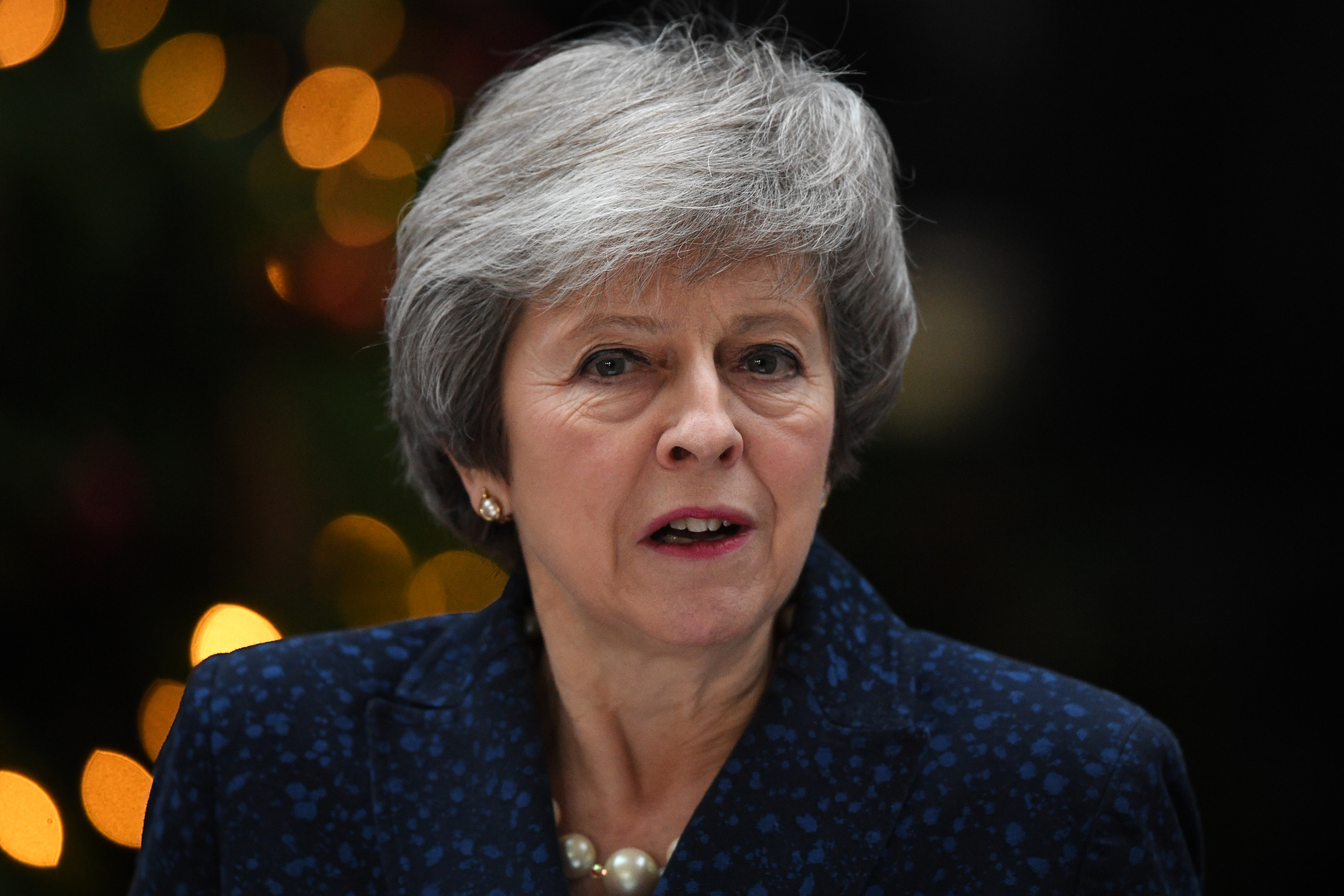
Prime Minister Theresa May speaks during Prime Minister's Questions in the House of Commons, London. PRESS ASSOCIATION Photo. Picture date: Wednesday March 27, 2019. See PA story POLITICS PMQs May. Photo credit should read: House of Commons/PA Wire

LONDON (AP) — British Prime Minister Theresa May told Conservative lawmakers Wednesday that she will step down once the U.K.’s exit from the European Union is delivered — a dramatic concession meant to bring enough of her colleagues on board to push her deal over the line.

May told a party meeting of legislators that she was aware of a desire for a new approach – and new leadership – in the second phase of the Brexit negotiations.

“I am prepared to leave this job earlier than I intended in order to do what is right for our country and our party,” she said, according to a transcript released by her office. “I ask everyone in this room to back the deal so we can complete our historic duty – to deliver on the decision of the British people and leave the European Union with a smooth and orderly exit.”

May has been under mounting pressure from pro-Brexit members of her Conservative Party to quit. Several have said they would support the withdrawal deal if another leader was chosen to lead the next stage of negotiations, which will determine Britain’s future relations with the EU.

In a packed meeting described by participants as “somber,” May finally conceded she would have to go, although she did not set a departure date.

Anti-EU lawmaker Jacob Rees-Mogg, who has clashed with May throughout the Brexit process, said she had been “very clear” that if Britain leaves the EU on May 22, she will quit soon after.

He said the prime minister had been “very dignified.”

“She out her case well, and reiterated that she had done her duty,” he said.

May’s announcement came as British lawmakers debated multiple options for leaving the EU as they sought to bring some clarity to the tortured Brexit process and stop the country tumbling out of the bloc within weeks with no exit plan in place.

In the wake of two overwhelming defeats for May’s withdrawal agreement with the EU, the House of Commons seized control of the parliamentary timetable for debate and votes on a range of Brexit alternatives.

House of Commons Speaker John Bercow selected eight widely differing options for votes from a list of 16 submitted by lawmakers. They include calls to leave the EU without a deal, to stay in the EU’s customs union and single market, to put any EU divorce deal to a public referendum, and to cancel Brexit if the prospect of a no-deal departure gets close.

Later in the day, lawmakers will vote on all of the options they could accept. The plan is for the most popular ideas to move to a second vote Monday to find one option that can command a majority. Parliament would then instruct the government to negotiate it with the EU.

May has said she will consider the outcome of the votes, though she has refused to be bound by the result.

The government condemned lawmakers’ move to seize control because it upends the usual practice in which the government sets the timetable for debate and votes in Parliament.

But Conservative lawmaker Oliver Letwin, one of those behind Wednesday’s votes, said “this is not an insurgency.”

“This process has come about as a result of the increasing concern that many of us have had across the House of Commons that we were heading not towards an approval of the prime minister’s deal, but alas towards a no-deal exit,” he said.

Almost three years after Britons voted to leave the EU, the date and terms of its departure are up in the air. Last week, the EU granted Britain a delay to the scheduled March 29 exit date, saying that if Parliament approves the proposed divorce deal this week, the U.K. will leave the EU on May 22. If not, the government has until April 12 to tell the 27 remaining EU countries what it plans to do — leave without a deal, cancel Brexit or propose a radically new path.

May, meanwhile, still hopes to bring the divorce deal that the government struck with the EU back for another vote in the House of Commons — if she can win over enough opponents to ensure passage. Lawmakers rejected the deal by 230 votes in January and by 149 votes earlier this month, primarily because of concerns about the Northern Ireland border.

Brexit Secretary Stephen Barclay said he had introduced a motion to have Parliament meet on Friday if needed so a vote could be held. But it remained unclear whether it would go ahead, since Bercow said Wednesday he would not accept another vote on the twice-rejected deal unless substantial changes were made.

House of Commons leader Andrea Leadsom told the BBC there was a “real possibility” the unpopular agreement would be brought back for a vote on Thursday or Friday.

Tony Travers, a professor of government at the London School of Economics, said the parliamentary votes could boost support for May’s deal by convincing pro-Brexit lawmakers that a withdrawal might be delayed or abandoned.

Rees-Mogg, who has sought a complete break from the bloc, said May’s deal is still a bad one, but “the risk is, if I don’t back it, we don’t leave the EU at all.”

“I think we have got to the point where legally leaving is better than not leaving at all,” he told the BBC. “Half a loaf is better than no bread.”

But Rees-Mogg said he would not back the deal unless Northern Ireland’s Democratic Unionist Party decided to vote for it. The DUP, which has 10 seats in the House of Commons, said Tuesday it still wasn’t prepared to support the “toxic” deal.

Wednesday’s votes in Parliament could potentially produce conflicting and inconclusive results. But they could push Britain in the direction of a softer Brexit that keeps Britain closely tied economically to the EU.

That would probably require the U.K. to seek a longer delay, although that would mean that the country would have to take part in May 23-26 European Parliament elections.

Many EU officials are keen to avoid the messy participation of a departing member state.

But the chief of the European Council told European lawmakers that the EU should let Britain take part if the country indicated it planned to change course on Brexit.

Donald Tusk said the bloc could not “betray” the millions of Britons who want to stay in the EU.

“They may feel they are not sufficiently represented by the U.K. Parliament but they must feel that are represented by you in this chamber. Because they are Europeans,” Tusk said.


from World News – Talking Points Memo https://ift.tt/2HKgXN6

Australia PM Accuses Party Of Asking NRA, Koch Industries For Donations

CANBERRA, Australia (AP) — Australia’s prime minister has accused an influential minor political party of trying to “sell Australia’s gun laws to the highest bidders” by asking the U.S. gun lobby for donations.

Prime Minister Scott Morrison was responding to an Al Jazeera documentary that reported One Nation party officials Steve Dickson and James Ashby flew to the United States for meetings with pro-gun interests including the National Rifle Association and political donors Koch Industries in September last year seeking money to undermine Australian gun laws.

Dickson and Ashby later told reporters that they had not secured any U.S. money. They also said they had been quoted by Al Jazeera out of context and often after drinking.

The trip took place weeks before the Australian Parliament banned foreign political donations with laws that took effect Jan. 1.

Morrison said the revelations were reasons why Australians should not vote for One Nation at general elections due in May.

“We have reports that One Nation officials basically sought to sell Australia’s gun laws to the highest bidders to a foreign buyer and I find that abhorrent,” Morrison said Tuesday.

Morrison said his government had made laws to “criminalize taking foreign political donations so foreign lobbyists cannot seek to influence our politics.”

Opposition leader Bill Shorten, whom opinion polls suggest will be prime minister after the election, accused One Nation of a “betrayal of the Australian political system.”

“The idea of One National political party operatives going to the United States, seeking millions of dollars, promising to water-down gun law protection in Australia — that was absolutely horrifying,” Shorten said.

The Al Jazeera documentary used secret recordings made by a journalist posing as gun lobbyist Rodger Muller with a hidden camera.

One Nation, an anti-Muslim party that had four senators after 2016 election but has been left with two after defections, said in a statement that all party members “have always complied with the law.”

One Nation also suggested the Qatar-owned Al Jazeera had breached new laws that prohibit covert foreign interference in Australian politics. The party said it had had complained to Australia’s main domestic security agency and police “due to concerns of foreign interference into Australian politics in the lead up to the imminent federal election.”

“Al Jazeera are a state-owned propaganda arm of the Qatari government that supports Islamic extremist groups and are not a legitimate media organization,” the statement said.

“One Nation was invited by Rodger Muller, who has now been outed as a foreign agent working for Al Jazeera to meet with the NRA, American business leaders and attend the Congressional Sportsmen’s Dinner” in Washington, the statement said.

Al Jazeera said it stood by its reporting and that its journalists “adhere to the highest standards of professionalism and objectivity.”

“The suggestion that our staff is involved in espionage is both unfounded and, quite frankly, farcical,” it said in a statement. It said it provided One Nation and its leaders “with an opportunity to comment on our evidence prior to broadcast but they declined to do so.”

The NRA in a statement late Tuesday said Al Jazeera representatives, disguised as members of a group called “Gun Rights Australia,” had set up meetings with NRA employees and brought Australian political party members to those meetings. “At no time did the NRA contribute funding to any Australian political party or Gun Rights Australia,” NRA spokeswoman Jennifer Baker said in the statement.

Ashby, who is party leader Pauline Hanson’s chief of staff, is recorded saying that the party would “own” both the Australian Senate and House of Representatives with a $20 million donation from the U.S. gun lobby. This means the party would hold the balance of power in both chambers and influence a government’s legislative agenda.

Ashby also warned that if such a donation became public, it would “rock the boat.”

He told reporters on Tuesday that the U.S. trip had been a fact-finding mission to learn campaign tactics.

“These conversations with the NRA were to look at nothing more than their techniques. This was not about sourcing money from the NRA. This was about sourcing technology, sourcing an understanding of how they operate, but never was it about seeking $20 million dollars from the NRA,” Ashby told reporters.

The news followed the mosque attacks in New Zealand on March 15 for which an Australian white supremacist has been charged with murder. New Zealand has responded by banning a range of semi-automatic weapons and foreshadowing a government-funded buyback of newly outlawed guns. The country’s response is similar to how Australia strengthened its gun laws following the murders of 35 people by a lone gunman in 1996 in Tasmania.

One Nation state president Steve Dickson, who is a Senate candidate at the next election, traveled with Ashby and Muller to the United States to ask for political donations, Al Jazeera reported.

Dickon told NRA officials that the Australian gun control model “will poison us all, unless we stop it,” Al Jazeera reported.

Dickson told reporters on Tuesday he supported Australia’s gun laws. He said had not solicited donations in the United States, but conceded his party was not wealthy.

“I will tell you the absolute, humble truth. When I was asked: ‘Do we need money to run election campaigns?’ I said: ‘Yes,'” Dickson told reporters.

A former One Nation senator who is now an independent lawmaker, Fraser Anning, has been widely criticized for blaming Muslim immigration for the New Zealand massacre.

Hanson, One Nation’s leader who was criticized for wearing a burqa in the Senate, voted for the ban on foreign donations in November.

“Overseas money should not have an influence in our political scene …. so I believe foreign donations should be stopped,” Hanson told the Senate.

Ashby and Dickson said Hanson did not speak to the media on Tuesday because she was unwell.


from World News – Talking Points Memo https://ift.tt/2TCSxqD

Tuesday, 26 March 2019

Theresa May: Not Enough Support For New Vote On My Brexit Deal

LONDON (AP) — British Prime Minister Theresa May conceded Monday that her twice-rejected Brexit divorce deal would be defeated by Parliament again if she put it to a new vote, though she said she still hopes to change lawmakers’ minds and get the agreement approved.

May also acknowledged that she may be about to lose control of the Brexit process to lawmakers who want to force the government to change direction.

“It is with great regret that I have had to conclude that as things stand, there is still not sufficient support in the House to bring back the deal for a third meaningful vote,” May told lawmakers in the House of Commons.

She said she will “continue to have discussions with colleagues across this House to build support” and hoped to hold the vote later this week.

Meanwhile, pro-EU lawmakers plan to try to seize control of the process by holding a series of votes on alternatives to May’s deal.

They hope these “indicative votes” on options including a new EU membership referendum or a “soft Brexit” that maintains close economic ties to the bloc can find a majority for a new path.

May said the government would “engage constructively” with the results of the process. But she said she was skeptical that it would produce a decisive result.

Almost three years after Britons voted to walk away from the EU, the bloc’s leaders seized control of the Brexit timetable last week to avert a chaotic departure at the end of this month that would be disruptive for the world’s biggest trading bloc and deeply damaging for Britain.

The bloc granted Britain a delay to its exit in hope its deadlocked politicians can find a solution to the crisis. But the EU isn’t counting on it. The European Commission said Monday it had completed planning for a “no-deal” Brexit — an outcome it called “increasingly likely.”

For two years, Britain’s departure date was set for March 29, 2019. Now, if the U.K. Parliament approves the divorce deal May struck with the bloc, it will leave the EU on May 22. If not, the U.K. has until April 12 to tell EU leaders what it plans to do — leave without a deal, cancel Brexit or chart a new path.

Parliament has rejected the deal twice, and May stands little chance of getting it approved unless she can win over Brexit-backing lawmakers in her Conservative Party and its Northern Irish ally, the Democratic Unionist Party. The DUP said Monday that the party’s “position remains unchanged.”

May has come under intense pressure to quit as the price of winning support for the deal.

At a meeting Sunday at the prime minister’s country retreat, Chequers, prominent Brexiteers told May they might back the deal — if she agreed to step down so that a new leader could take charge of the next phase of negotiations, which will settle Britain’s future relations with the EU.

Britain’s best-selling newspaper, The Sun, piled pressure on May with a front-page call for the prime minister to resign, under the headline “Time’s up, Theresa.”

Former Foreign Secretary Boris Johnson accused the government of lacking “gumption” and chickening out on delivering Brexit. Writing in Monday’s Daily Telegraph, Johnson said that to win support for her deal, May must show that the next phase of negotiations “will be different from the first.”

That sounded like a hint he could support the deal if May agreed to quit. Johnson is likely to be a contender in any future Conservative leadership race.

May is hanging on, hoping she can persuade Brexit-backing lawmakers that rejecting her deal means Britain may never leave the EU.

She told lawmakers that she would not lead Britain out of the EU without a deal unless Parliament — which has already rejected the idea — voted for it.

“Unless this House agrees to it, no-deal will not happen,” she said.

She added that canceling Brexit “must not happen,” while “a slow Brexit” that involved a long delay to Britain’s departure, “is not a Brexit that will bring the British people together.”

The European Commission said Monday that it had finished planning for a no-deal Brexit, which could occur on April 12. The remaining 27 EU countries are hiring hundreds of people to conduct extra border and customs checks as well as to staff call centers set up to handle Brexit inquiries.

The commission warned that despite the preparations, a cliff-edge Brexit would cause “significant disruption for citizens and businesses” in the bloc. It said new tariffs and border checks would cause delays for both people and goods.

The bloc also said that more remained to be done on ensuring an open border between EU member Ireland and the U.K.’s Northern Ireland — something both sides have agreed to. Checkpoints there were a source of great tensions during the bloody Irish “troubles” from 1968 until the Good Friday peace agreement was sealed in 1998.

An EU official said the bloc was in “in intense discussions with the Irish authorities about these matters.”

Opponents of Brexit feel the political tide may be turning in their favor. Hundreds of thousands of people marched through London on Saturday calling for a new referendum on whether to leave the EU or remain.

But with the deadline for a Brexit decision less than three weeks away, British politicians remain divided, and increasingly despairing about the country’s political gridlock.

“Brexit is like the Death Star of politics,” Conservative legislator George Freeman said. “I always feared it would be like this. It’s destroying and soaking up all the prime minister’s room for manoeuver and political goodwill.

“I’ve never known this country so divided, so angry and in such a dangerous state,” he said.


from World News – Talking Points Memo https://ift.tt/2JCZzvO

Netanyahu Cuts His DC Visit Short After Gaza Rocket Attack On Israel

RAMAT GAN, ISRAEL - MARCH 04: Israel's Prime Minster Benjamin Netanyahu delivers a speech during the launch of the Likud party election campaign on March 4, 2019 in Ramat Gan, Israel. (Photo by Amir Levy/Getty Images)

WASHINGTON (AP) — Israeli Prime Minister Benjamin Netanyahu says he’s cutting short his visit to Washington after a Gaza rocket attack on Israel.

Netanyahu described Monday morning’s rocket launch that struck a home in central Israel as a “criminal attack” and vowed to strike back hard. He says he will return to Israel to handle the crisis shortly after meeting with President Donald Trump on Monday.

An Israeli rescue service says the rocket from the Gaza Strip wounded seven people.

Netanyahu arrived in Washington on Sunday for what was to have been a three-day visit. He was going to speak at the American Israel Public Affairs Committee and was to be hosted at a White House dinner.


from World News – Talking Points Memo https://ift.tt/2OmwZ08

Friday, 22 March 2019

Arrest Warrant Issued For Ex-Brazilian President On Corruption Charges

SANTIAGO, CHILE – NOVEMBER 21: President of Brazil, Michel Temer, observes during signing ceremony of the Free Trade Agreement between Brazil and Chile at the Palacio de La Moneda; on November 21, 2018 in Santiago, Chile. (Photo by Sebastián Vivallo Oñate/Agencia Makro/Getty Images)

RIO DE JANEIRO (AP) — Former Brazilian President Michel Temer was arrested on Thursday on corruption charges, a dramatic development in a sprawling corruption probe that has roiled Brazil has showed no sign of slowing.

In a statement, the Prosecutors Office in Rio de Janeiro said that Judge Marcelo Breitas had issued an arrest order for Temer and Moreira Franco, a former minister and close ally of Temer.

The statement did not detail the charges against the two and a spokeswoman at the Prosecutors Office also declined to specify the charges.

Globo Television showed images of the former president being accompanied by police in Sao Paulo, where Temer lives. Helicopter images showed Temer getting out of a police convoy at an airport, presumably to be brought to Rio de Janeiro and processed.

Breitas is overseeing the Rio portion of a massive corruption probe involving kickbacks to politicians and public officials. Since launching in March 2014, the so-called Car Wash investigation has led to the jailing of top businessmen and politicians, including ex-President Luiz Inacio Lula da Silva.

In a statement, Temer’s Brazilian Democratic Movement party called the arrest “hasty.”

“The party hopes that the Justice Department re-establishes individual liberties and the presumption of innocence,” it read.

Temer, who was vice president, came to the presidency in 2016 after President Dilma Rousseff was impeached and ousted from office for mismanaging the federal budget.

From the get-go, Temer’s administration was hit with several scandals, including some involving the president himself.

Three times, prosecutors charged Temer with corruption. Because he was a sitting president, he could only be tried if two-thirds of the lower chamber in Congress agreed. Temer twice mustered enough support in Congress to avoid prosecution and his term ended before the third case proceeded far enough for Congress to vote.

Temer left office on Jan. 1 and no longer has the partial immunity that helped him avoid prosecution.

Asked about looming cases against him in December, Temer said he wasn’t worried and did not believe he would be arrested.


from World News – Talking Points Memo https://ift.tt/2FptcLs

Top bosses at Goldman Sachs to share bonus pot worth up to $500m

Eye-watering sum, to be split between 20 bankers, is one of the biggest payouts in the bank’s history Top bosses at Goldman Sachs are in lin...